Response to “The Big Kisseloff”
by Harvey Klehr, Commentary, April 16, 2025
Response to “Last Soldier Standing” by David Chambers, July 5, 2025
Klehr: Part One:
The review by Mr. Klehr was neither unexpected nor surprising. Typical of Klehr’s reviews, it 1)relies on personal attacks against someone who simply disagrees with his conclusions; 2) ignores evidence new and old that casts doubt on the information from the Russian files which formed the basis of his “Spies: The Story of the KGB in America”3) relies heavily on “Spies” in his argument about Hiss and Chambers to the exclusion of other evidence that is stronger and more complete than what is in that book.
Since most of what Klehr says here was already responded to 16 years ago in a review of “Spies,” (Click here to read that review), so for this section I’ll concern myself with his odd belief that he is more persuasive by constructing his arguments with insults rather than logic, as if he were addressing a school yard of eighth graders. Nor is this the first time. Yet, contrast his writing to that of algerhiss.com, which is sober and factual to the point where— I’ll admit it — it can be a bit sleep inducing. The difference is, to put it bluntly, journalism is about facts, looking at them, analyzing them, understanding them until they form a picture. In Klehr’s hand, academic writing is about telling you your mother swims out to troop ships.
Let’s just take the review’s headline, in which surely Klehr sets or ties a record for the earliest personal attack in a story. I’ve been scratching my head over the meaning of “The Big Kisseloff.” Is Klehr doing a play on my name to call it a “Kiss off”? This is what made me wonder, has historical criticism really sunk that far that an author’s name is fair game?You’d think someone who taught at Emory for so long could do better than that, but I guess not.
As I said earlier, it’s not the first time. My first thought after reading the review was that its vehemence indicated the book really hit a nerve or maybe represented a Defcon Three threat to Klehr’s arguments about Hiss. But then I remembered “In Denial,” the 2003 book by Klehr and John Earl Haynes and realized the nastiness was typical. In that book, the late Victor Navasky is referred to as “the myopic” Victor Navasky because he had the temerity to find fault with their arguments after simply doing his research.
The reference is in a chapter called “Lies About Spies.” It’s given that title because in Klehr’s view his research is so perfect (The “Spies” chapter on Hiss is called “Case Closed”) that anyone who disagrees with them must be a liar, or like I am, “dishonest.” About John Lowenthal, he writes that “no one has been more creative at evading evidence.”As for Bill Reuben, who knew more about the Hiss case than anyone, they objected to his being chosen to write the entry on the case for the “Encyclopedia of the Left,” saying it was akin to “choosing a Holocaust denier to contribute to an encyclopedia of Jewish history.” (I’m still trying to parse that one).
You would think that someone so harsh would be a little more careful with his own work, but no, as we’ll see in my next post when I’ll use as an example the case of Hede Massing, the Austrian actress who testified against Hiss at his second trial. Apparently, based solely on the information about her in the Russian files, Klehr believes she was a credible witness when she claimed she knew that Hiss was a member of the Communist underground. This too was gone into great detail on algerhiss.com, in an article by yours truly, but based on the revelations from the newly released FBI files. These were the unredacted files released to me as a result of an unprecedented FOIA win against the FBI by attorney James Lesar, in which we sought and won the re-release of the Hiss file and related files, totalling some 120,000 pages. None of this material was mentioned by Klehr who gives much more credence to the notes taken by Alexander Vassiliev of KGB files shown to him as a result of a pay out by an American publisher to Russians with access to those files. While the references to Massing might add up to a few carefully chosen pages in total, I received hundreds of revelatory pages devoted specifically to her and her husband. Absolutely none of this seemed to be of interest to Klehr, but more on that in the section to come.
Another thing I have found curious about Klehr’s work is that I’ve always assumed a history professor would believe that primary sources are often invaluable when doing this kind of historical research. And even if they are not, they still can lend a project context and perspective. In journalism, it’s also the right thing to do: if you criticize someone for their work or actions, you contact them or you make the effort to do so. It’s not always about just getting their response, it’s often about their perspective, which can help give credence to your own work. To give you an example, I once took my heavy tape recorder and hiked uphill through San Franciso’s streets to knock on Ellen Chambers’ door. Whittaker’s daughter refused to see me, but at least I, a member of the pro-Hiss “cult,” which is how Klehr describes me, tried. My wife and I also chatted with Chambers’ son John, a the family farm in Westminster, MD. I contacted the last living FBI agent who worked on the case and others who were anti-Hiss. Some spoke to me, others wouldn’t. For his documentary on the case, John Lowenthal, who Klehr says was also a Hiss cult member and who actively evaded the truth, interviewed on camera a host of anti-Hiss stalwarts, including among others, the journalists Isaac Don Levine and Ralph DeToledano.
Yet, as far as I can tell, Klehr made no attempt to contact Hiss, for example, who I believe was still alive when Klehr was doing his research. Nor did he reach out to Tim Hobson, Hiss’s stepson who was living with his parents in the 1930s when Chambers claimed to be a regular visitor, picking up and dropping off government files, some of which were allegedly copied by his mother on the family typewriter. He certainly didn’t have to agree with what they said, but wouldn’t it have been worthwhile to hear them out? Wasn’t there any value in hearing and assessing his comments? Does he really believe that a collection of notes from a curated source of documents was more valuable than someone who was an eyewitness to those events? Maybe he was afraid that Bill would yell at him. He yelled at me plenty, but I took it. Have I been perfect in this regard, nope, but I have done the best I could and don’t pretend I’m Don Rickles either.
Klehr’s review did sometimes make me laugh. At one point, he calls my writing about the frameup, “a hyperbolic claim typical of his work lo these many decades.” He then goes on to engage in a perfect example of hyperbole by claiming I say that “virtually all” of Chambers’ actions and activities were invented.
Klehr also dismisses my work by incorrectly stating in his review that I have “literally spent half a century denying that Hiss was a Soviet spy.” Had he bothered to read Tony Hiss’s introduction or my early chapters, which make it clear that my research was always aimed at getting at the truth? When Allen Weinstein’s “Perjury” was published, I was constantly asked whether my assessment was correct. My answer was always the same: the FBI and defense files were at my fingertips. Had I found any indication that Hiss was lying I’d have left or at the least try to figure out why he was concealing the truth. I didn’t owe him anything. To that end, I spent hours questioning him about Weinstein’s assertions and then comparing his answers to what was in the files. In every single instance, the files supported his answers, not Weinstein’s.
When Weinstein spoke at the City Center in New York, I took an FBI file with me that he said showed Hiss had lied about something. Only it didn’t. When I presented it to him, he refused to take it, instead, without even looking at the file, he accused me of altering it.
The efforts to intimidate authors and even publishers who differ with Klehr was captured perfectly in a comment by the Candian historian Amy Knight, who also came under attack for disagreeing with Klehr. Writing in the Times Literary Supplement, she said, “The main purpose of Spies, it seems, is not to enlighten readers,” she writes, “but to silence those who still voice doubts about the guilt of people like Alger Hiss, Harry Dexter White, I. F. Stone and others.”After reading in the review about my dishonesty as a reporter (the first time I’ve ever been accused of such), I was reminded of this story I wrote for the Web site about my only encounter with Harvey Klehr. It was at a conference in Washington celebrating the release of the notes that were used for “Spies.” It began with a report by an historian named Eduard Mark who collaborated with Klehr on an article about Alger:
“Mr. Mark,” I said. “When I went to journalism school, they told us on the first day ‘if your grandmother says she loves you, check it out.’ In your paper, you cite an article on the Web that you said proves Hiss lied about his relationship with Maxim Lieber [a literary agent who was also alleged to have been a Soviet agent]. The article says that Lieber’s children confirmed they had a longstanding relationship with Hiss. Did you check the article out?”
Mark looked a bit alarmed. “No, I didn’t,” he said. “Harvey did.”
I resisted asking him if Harvey Klehr wrote the rest of his paper as well. Instead, I looked over at Klehr, who was sitting on the other side of the room, looking down at the table.
“Mr. Klehr,” I asked, did you check it out?”
Klehr muttered that he had.
“That’s funny,” I said, “because I spoke to Lieber’s children two days ago, and they say the story is false. They didn’t have a relationship with Hiss as the story claims. In fact, they said they met him in 1993 at a fundraiser for a summer camp, and that afterward he sent them a copy of his book. That was it.”
Klehr just looked down at this shoes.
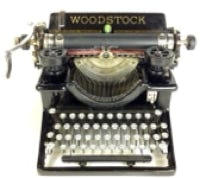
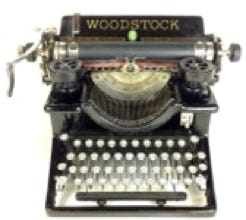
I’d be curious why Klehr believes that visiting the tiny house on 30th Street and talking to the residents about what they could hear from next door; talking to the current resident to the north of the house about what he could hear; talking to the former next door neighbor who was there when the Hisses were; talking to Tim Hobson who was living in the Hisses’ home, has such little value. I also spent hours reading the letters and testimony of other neighbors as well as statements in the FBI files; measuring the sound of the typing of a Woodstock typewriter.
All of them said the same thing: they heard no typing and they would have. They certainly heard Tim Hobson’s piano playing, and when a sportswriter moved in after the Hisses left, his typing they heard clear as day.
Were all of the Russian files, or at least the part that were released, wrong? I doubt it but compare them as evidentiary value to old fashioned leg work and then let’s talk about which of us is the cult member or who is suffering from “delusional madness”. After that, let’s talk about where I was deliberately dishonest in my work. Either he finds it or apologizes.
Part Two:
In Harvey Klehr’s world, you either agree with him or you are a liar. There is no in between. God himself could tell Harvey that on the the third page of his review, second line, there is a comma out of place and Harvey would respond by demanding to know, “What did you ever do? You must be some kind of Stalin apologist.” In Harveyworld, because, he says, I ignore the evidence he presented to the world nearly 20 years ago, I am dishonest, this, despite the fact that the Vassiliev notes, which he claims to be dispositive, even though no one else has examined the documents from where they came; aren’t necessarily complete documents and are all to often based on s second and thirdhand accounts of conversations.
As I point out in “Rewriting Hisstory,” I am not saying there isn’t value in such material, there is, but part of the problem is when it gets interpreted by someone with such a partisan viewpoint that one has to be hesitant. I can hear the voices saying well, you are on the same level of partisanship, but that’s simply not true. Tony Hiss and I have always been dedicated to learning the truth wherever it took us. Contrary to Klehr’s writing (see part one), our Web site is also always respectful and measured when considering different points of view. We frequently hear from those who disagree with us and we are just as likely to help someone who feels that Hiss was guilty as we are a person who is convinced he was innocent.
I continue to wonder why Klehr, who claims superiority over everyone who questions his logic,never once reached out to any of us on the other side to hear us out or judge what we had to say and maybe consider the merits of a different point of view. Was he intimidated by the mighty Hiss forces? He could have spoken to Bill, John Lowenthal, Tony and his stepbrother Tim Hobson. He could have reached out to Alger who spoke to everybody. Why not? What was he afraid of? My guess, he’s afraid of being wrong
When Allen Weinstein’s “Perjury” was published, I spent days carefully quesioning Alger about nearly every revelation in the book. I then checked his answers against what I found in the defense files (which Weinstein claimed contained the key evidence of Hiss’s guilt) that were sitting behind my desk. In every instance, it was clear that Alger not Weinstein was telling the truth. If that had not been the case, I would have packed up and left, with regret but not with any hesitation. Even then I knew I was going to be a journalist and my reputation for honesty and accuracy was important to me. I was already writing about the case, and I knew that as a journalist (albeit an untrained one) my loyalty was to the readers and not to the subjects of my stories. That’s the difference between journalism and public relations, and I don’t do PR.
From working with Bill Reuben, who could analyze a document better than anyone I’ve ever met, to the teachers at Columbia’s journalism school, who were all veteran reporters and editors, I was taught how not all information is equal; how a reporter has to weigh and examine information; and how primary source material is often the strongest and most accurate information you can find.
When Klehr writes that I ignore and distort information that proves Hiss was guilty, it leaves me wondering if he bothered to read the book. As I say early on, 50 years of research produces a lot of information and not all of it can go into a book. When “The Haunted Wood” and “Spies” were published, we spent months looking into their revelations as we did with the release of Vassiliev’s notes nearly two decades ago. We reported our conclusions on algerhiss.com. The beauty of modern-day publishing is that I could provide links to our stories on the Site, saving space for other material in the book. Harvey Klehr knows that of course. He has seen our Web site, algerhiss.com.
The fact is if I didn’t look into material that suggested Hiss was guilty, including the Vassiliev notes, this book would have been subtitled “A 25-Year Journey….” What follows is an incomplete general list of the book’s most important sources:
* The transcripts of both the first and second trials;
* The defense files;
* The FBI files (case files and individual files on key figures in the case; the new unredacted releases totaled some 120,000 pages),
* Letters between Alger and Priscilla Hiss, most of them written during the period when the Hisseses allegedly became radicals;
* The letters between Laurence and Helen Duggan
* The extensive files of Bill Reuben, containing a mixture of material, including original interview notes and transcripts, clippings and government files, and extensive correspondence, all turned over to me after his death. The collection is so large, it took me nine months to digitize it.
* The raw interviews conducted by John Lowenthal.
* The grand jury minutes.
* The HUAC investigative files.
* Tapes and other material generated by my own interviews.
* Examination and comparison of nearly two dozen Woodstock typewriters, including Woodstock #230099.
* Examination of the Baltimore documents, allegedly typed by Priscilla Hiss.
* The Vassiliev notes.
* Visits to key sites mentioned in Chambers’ narrative
* The personal papers of participants in the case;
* Periodical and newspaper coverage of the case
* Reading more than two dozen books on the case.
That is not a complete list but the point is there is plenty of material representing both sides. While you synthesize all the material and weigh it, it is impossible to include all or even most of those discussions in a comprehensive history of the case because then Proust himself would start scratching his head in frustration at all the volumes it would take up. No publisher would touch it, and even if I were to put it all online, it would take more than a decade to do it. Nor could Klehr argue that this is a decidedly pro-Hiss list.
Klehr seems to feel that the question of guilt or innocence is answered exclusively in the Vassililev notes and in Venona, to the exclusion of nearly everything else, especially the FBI files. He then accuses me of ignoring or distorting his work — hence the “dishonest” charge.
“Take Hede Massing,” he writes. Ok, let’s take Hede Massing, a key witness against Hiss inthe second trial who testified to firsthand knowledge that Hiss was trying to recruit a State Department official named Noel Field to work with him in the Communist underground. I spent months looking into her testimony after getting the first batch of unredacted FBI files about her. They were eye-opening. Contrary to what Klehr writes, I also spent considerable time examining Haynes and Klehr’s interpretations of the Vassiliev notes. (Click here to read my original story) What Klehr fails to acknowledge are all the major contradictions between the notes, the FBI files and her testimony and memoir. Perhaps he is unaware of them because so many appear in the unredacted FBI files. Nothing in his review suggests that he saw them. Many of the pages used in my discussion of Massing can be viewed on the footnotes page of rewritinghisstory.com so readers can decide for themselves whether I treated her story fairly.
The FBI called Massing “a Viennese actress with a doubtful reputation”. In the early 1940s, she was married to a writer and Communist Party member named Paul Massing. The two were forced to leave Vienna to escape the Nazis. Paul Massing concealed his membership in the Party on his immigration application and immediately ran into trouble with the FBI.
In March 1947, according to a document that was unredacted after we made a specific request to see it, the FBI visited Paul Massing and basically made him an offer he couldn’t refuse: become a confidential informant or face deportation.
Both became C.I.’s. Hede’s relationship with the FBI lasted 20 years, which confirmed the defense’s suspicions during the trial that she was testifying under duress. The next year and a half marked the period of the most intense questioning. Even before then, they sat with the State Department’s chief Red hunter Ray Murphy, for around four hours and “held nothing back,” according to Hede. How would it be possible that Murphy, who hated Hiss, who blamed him for all his troubles in the Department, and who had already seen Whittaker Chambers who told Murphy that Hiss was a secret Communist, would Murphy not have asked her about Hiss. The answer is it is not. He must have mentioned Hiss and got nothing in return.
In his comments on Massing, Klehr sticks to the script from the Soviet files while at the same time accusing me of avoiding “the context” of the references to Hiss. He also says I distort what they say and “he,” meaning me, “simply ignores other damning documents,” which is kind of funny because in his discussion Klehr simply ignores all the evidence in the new FBI files, picks and chooses what he thinks will be helpful. As for context, well, there’s a story in that one.
Around 2009, there was a small conference at NYU. One speaker was Klehr’s writing partner, John Earl Haynes. He talked about what the Russian files said about Massing and how damning they were for Hiss. When he took a break from speaking, I simply couldn’t restrain myself and said, “But don’t you put any of her comments in context?”
His answer shook me as it did most of the room. He said, “No, our job is to name names. We leave the rest to others.”
Let’s see what Klehr omits. Much of this information came from the earliest batches of unredacted documents, released before 2010. One can only assume that Klehr has been so busy insulting other writers that he hasn’t gotten around to these FBI files yet.
At a September 27 appearance before HUAC, they had another opportunity when they were specifically asked about Hiss but offered nothing of any substance. The next day, she was debriefed by the FBI. While Massing claims she told them the story, no FBI document has turned up indicating that was true. Nor I have seen any reference in a later document to her telling them the story. s but again said nothing about Hiss.
It wasn’t until three days after Chambers turned up the pumpkin papers and Julian Wadleigh began talking that agents visited Hede ostensibly to ask her about Wadleigh even though the two had no reported dealings with each other. That day, however, she told the story that elevated her to fame for the first time. Fame was something the former actress was not adverse to. Only a few weeks later, she would sign a lucrative deal with a publisher to tell her life story.
In her statement to the FBI, Massing put the date of the meeting with Field as sometime in the winter of 1934/35. Massing told the agents she hadn’t said anything earlier because her memory of it was too foggy. That contradicted what she would later write in her memoir, “This Deception”, that she remembered her first meeting with Alger in great detail. The next day, in her grand jury testimony, she said she had forgotten the meeting until she saw a photo of Hiss at the San Francisco Conference. That was in 1945, so her memory was refreshed two years before she became a confidential informant.
The FBI interviewed her again on July 8, 1949. Now, she said she and Field were at the Lincoln Memorial when he told her he was being recruited. The new date of the meeting was May 1935. Previously, it had been 1934-1935 or 1935.
In 1951, when testifying before the Senate Internal Security Subcommittee, she recalled Field putting it this way: I have come to the conclusion that it really quite ridiculous that I should work with you when I can work with an old friend of mine who works with me in the State Department.”
Whoops. If that quote was accurate, she was in effect confirming Hiss’s claim that the story was false. Hiss and Field were never in the State Department at the same time. And in the summer of 1935, when she said the conversation occurred, depending on the date, Hiss was either working for the Nye Committee or the Department of Justice. He wouldn’t join the State Department until 1936.
None of these significant contradictions made into “Spies. Yet, I’m the one who supposedly ignores damning information. The fact is, Klehr has no idea how I conducted my research. The evidence he says was so damning and was thus deliberately omitted was examined carefully when “Spies” was published. Rather than have an entire book devoted to analyzing “Spies” and the Vassiliev notes, I supplied a link to the reviews on algerhiss.com.
Still, it’s hard not to point out a few things from the files that Klehr believes are so sacrosanct. For example, he mentions one episode where an alleged underground leader, J. Peters, “blurted out that Hiss was a member of the fraternal [CPUSA] organization who had infiltrated the Surrogate [State Department] and was then transferred to the neighbors [GRU].”
Let’s do something that I’m not sure Klehr has, let’s think about that in regard to the Massing story. According to Massing’s testimony, the meeting with Field occurred in 1935. There are several problems with that, but let’s accept that date. In 1935, as I noted above, Hiss was either with Nye Committee or the Department of Justice. He didn’t join the State Department until the fall of 1936. According to Peters, he wasn’t transferred to the GRU until after he joined State, so if he was a member of the KGB in 1935 when the confrontation with Massing occurred, then both were allegedly part of the same organization and there was no need to compete.
That’s the problem in a nutshell with relying solely on the files as evidence.
In his review, Klehr ignores all the other dates that Massing gave for her meeting with Field and chooses one that he says she testified to at trial: November 1935. Even worse for Klehr, that’s not what she said. On page 1262 of volume two of the trial record, she is asked when the meeting took place, and she says, “late summer or early fall of 1935.” From where he got November, I have no idea.
And talk about omitting damaging information about alleged conversations as recorded in the Vassiliev notes, on page1296, she is asked about a meeting she had with Hiss in December 1948 to ask him about the meeting with Field. She is asked whether she told them that she had never mentioned it to anyone else. She responds that she probably did say that.
“And that was a fact?
“Probably,” she answers.
Noel and his wife Herta were both arrested by Czech authorities in 1949. They were held in solitary confinement and subject to torture until 1949. After his release, Noel wrote to Alger, saying in part:
…it was not until after I came out of jail that I learned of the part played in your second trial by false testimony of a perjured witness with regard to a purported meeting and a conversation, neither of which ever took place, either within or without the confines of our Washington apartment. That my own imprisonment prevented me from nailing this outrageous lie is not the least part of the tragedy which befell me in 1949. My definite and absolute personal knowledge of the complete untruth of this particular bit of evidence is the clearest proof to me – aside from experience of your personality and outlook – of the falsehood of the rest of the “evidence” on which you were convicted.
Before Herta was arrested, the defense sent an attorney to see her in Prague and get a statement from her regarding Massing. This is what she said:
Thank you very much for acquainting me with the report Hede Massing made on a conversation she claims to have had with Alger Hiss in our apartment. I cannot remember our having invited Hede Massing and Alger Hiss together for dinner. I am sure this conversation never took place.”
One of us thought these statements were pertinent.
Part Three:
In Harvey Klehr’s attack on Rewriting Hisstory the retired Emory professor finds the book deficient because he believes it doesn’t address the evidence that suggests Hiss was guilty. That just happens to be the evidence he presented in his book, Spies, which he co-authored along with John Earl Haynes and Alexander Vassiliev. He even calls me a liar because I don’t take his evidence into consideration That, of course, a lie.
The chapter entitled “Cold War at State” in Rewriting Hisstory deals extensively with the most important evidence that has emerged from the Russian files since they were first opened. That includes quite a bit from Spies. I also point out that we reviewed Spies and its findings over a decade ago for algerhiss.com. (The review can be found here). The problem is there is only so much space in a book, and an analysis of the Spies chapter on Alger would take up most of it. Hence, he link to the Web site.
The real question here is what is the best evidence in the case. While the Russian files clearly have value, they actually say very little about the Hiss-Chambers case except by inference, and not much of what they say about Alger can be considered from an objective viewwpoint to be definitive. Too many times they fail the check test against known events.
I’ve yet to see a calm, rational response by Klehr to our review of Spies on algerhiss.com, and certainly there isn’t one in his review of Rewriting Hisstory. Nor does he have any use for basic reporting. He simply dismisses out of hand a huge finding that had the FBI so alarmed it was still covering it up twenty years after the trial. It involves one of the key assertions against Hiss in both The Haunted Wood and Spies that he was involved in taking the economist Harold Glasser from one underground group to another. Chambers’ said he knew Glasser as a member of the underground. In fact, in a list of alleged underground members compiled by a Russian operative in the United States named Gorsky, he includes Glasser in a group headed by Chambers. That in itself is odd because Chambers never claimed to lead a group; he was just a courier between the group and Party officials. Members of the group who talk about it said they hardly remember Chambers at all.
But if Chambers was not just an occasional presence but the actual leader of the group, and if Glasser had been a member, why was it that Chambers couldn’t identify Glasser’s picture when it was shown to him by the prosecution? Klehr believes that Chambers couldn’t be expected to remember everything, (Allen Weinstein basically said the same thing when Chambers’ numerous errors were pointed out) but the whole case was contingent on Chambers’ alleged ability to remember the smallest details sometimes from a single visit or encounter from a dozen years prior. This, is but one example of the problems raised when relying solely on the files as the main evidence. iNo wonder, when we pointed this out more than a dozen years ago, Klehr didn’t respond and hasn’t done so since to the specific points raised in the book or the algerhiss.com essay. It undermines his work, and so his only response is to call names.
Here’s another example. Klehr also doesn’t like that I suggested that the list of group members was put together from newspaper stories. Ok, then, so what is William Pigman doing on the list, which was compiled around the the time that the Pumpkin Papers were released. As it turned out, quite a few of the documents came off the open shelves at the Bureau of Standards where Pigman worked. Pigman told the FBI that he met Chambers all of once.
Listing Franklin V. Reno and Felix Inslerman as members of the group also suggesst Gorsky wasn’t referring to a real group. Reno was a mathematician at the Aberdeen Proving Ground who Chambers hounded for information until he finally got it. Inslerman was a photographer who took some pictures for Chambers on at the most five occasions. Chambers claimed the two worked together for a year but before the New York grand jury, Chambers misidentified him, saying that a hapless fellow named Sam Pelovitz who looked nothing like Inslerman, as his photographer. Both Inslerman and Reno were publicly associated with Chambers at the end of 1948, however, as was Pigman.
For some reason, J. Peters, who Chambers said basically ran the entire Communist underground (if there was one) is listed as a member of the group.
Klehr dismisses me as a “freelance writer,” but I have decades of work as a reporter. As a journalist you must learn to judge evidence when trying to piece together any kind of story. In the Hiss case, you have evidence from the files and you have evidence from people who were there at the time. You have apartment layouts, you have affidavits from former neighbors, the Woodstock typewriter, the documents themselves, current and former Party members, the latest documentary information in this case from the grand jury, HUAC, the trial record, all of which can be checked and cross checked, and then you have the Russian files, which are all too often just partial translations or pieces of documents without the documents that refer to them. Too often they have been selected specifically for the client.
As I point out in the book, just because someone says something doesn’t make it true. One doesn’t even know, for example, if what was said in the files was even recorded accurately. Erica Wallach, the adopted daughter of Noel and Herta Field told Bill Reuben’s agent Peter Shepherd that after her arrest in behind the iron curtain her interviews were rewritten to please the interlocutor who may or may not have been instructed on what should be written down by a higher up.
One gets the feeling that Klehr is willing to overlook and problems that might be posed by the evidence from the files as long as he believes it points towards Hiss’s guilt. There is no indication that anything can sway him otherwise. I say this because while he calls me a liar for allegedly ignoring his evidence, he has nothing to say about any of the major findings in “Rewriting Hisstory.” In the book’s 300+ pages you’d think that maybe one piece of reporting had some merit. Nope. So he ignores all of the book’s major findings then blithely accuses me of being closed off to the truth. I really have to laugh at that one.
To further illuminate the silliness of his position, what follows are in no particular order, 25 major findings in “Rewriting Hisstory” that go to the heart of the charges against Alger Hiss. I could have listed many more, but in Harvey Klehr’s view, not a single one has merit:
1) The government withheld from the defense Chambers’ longest most detailed statement because he was unable to identify photos of more than a dozen people he claimed to work closely with in the Communist underground. Many were key figures in the government’s case against Hiss.
2) A forensic examination of the Woodstock typewriter even by an amateur showed the government was lying when it attributed drops of solder on the typefaces to typical work at the Woodstock factory. My comparison of the typewriter placed in evidence (#230099) to 20 other Woodstocks of similar vintage showed the solder drops on 230099 to have been an anomaly.
3) The card placed in evidence by the prosecution, claiming it to have been Priscilla Hiss’s Socialist Party membership card, was nothing of the sort.
4) There was no evidence that Alger Hiss was ever a member of the Communist Party.
5) A British barrister acting on his own in the 1950s, examined the typewritten evidence and demonstrated that Priscilla Hiss was not the typist of the Baltimore Documents.
6) Esther Chambers was a repeated challenge for the prosecution. Discussing the layout and colors of the Hiss’s home on 30th Street in Georgetown, she mistakenly described to a “t” the house next door.
7) HUAC members knew that despite Chambers’ public denial, he had used the name “George Crosley,” as Hiss had told them. They knew this even before Hiss identified him as Crosley, not Carl, the name Chambers said he used, meaning that Hiss, not Chambers was telling the truth about their relationship.
8) Although Chambers at one time said the Hisses’ home on 30th Street was his “headquarters,” he was completely unaware that Alger Hiss’s stepson Tim Hobson, was laid up for months with a broken leg. In exclusive interviews, Hobson insisted he never once saw Chambers at the house.
9) Chambers’ friend Meyer Schapiro gave important information to the FBI and the grand jury, indicating that Chambers left the Communist Party much earlier than he claimed, casting doubt on his allegation that Hiss gave him documents in 1938 for transmission to the Russians.
10) The government turned Hiss’s boss in the State Department, Francis B. Sayre, into a mole. Sayre reported on important defense meetings and strategy to the FBI and Justice Department.
11) The FBI spent over two years trying to prove that Hiss was the spy codenamed ALES in Venona telegram no. 1822 but gave up after George Kennan told them that the idea that the Russians gave Hiss a medal in and around the Yala conference as reported in the telegram was an impossibility. Well into the 1960s, the FBI was still trying to determine ALES’s identity.
12) Aside from my interviews with Hiss’s stepson Tim Hobson, I also spoke to Elizabeth Inslerman, the widow of Chambers’ alleged photographer, Felix Inslerman, and Mrs. Elizabeth May, who along with her husband, strongly disputed aspects of Chambers’ story in fresh ways.
13) Alger’s membership in the Communist Party or at least his radicalization was, according to the prosecution, strongly supported by his work with a left wing group called the International Juridical Association but an FBI interview with Shad Polier shows that Alger was brought into the group as a moderate and not as a radical, to make its journal more palatable to a larger population.
14) Allen Weinstein claimed that Priscilla was a member of a radical group called the American Labor Associates but she was apparently the recording secretary for one meeting, if that. 15) The personal letters written between Alger and Priscilla during the crucial years where they were alleged to have become radicalized and joined the CP, showed no such interest by either of them.
15) Whittaker Chambers’ story about his entering the underground and how and why he was recruited were demonstrably false.
16) The defense showed that several documents introduced by the prosecution as having been handed over to Chambers by Hiss, never went to Hiss’s office. Now, even more documents appear to have not been routed to Hiss’s office.
17) An experiment with the Woodstock typewriter showed that it would have easily been heard by the Hiss’s neighbors on 30th Street. Interviews with one former neighbor and a current found them both complaining about the excessive noise from next door.
18) Hede Massing, a key witness against Hiss, had been a confidential informant of the FBI since March 1947 but despite numerous extensive interviews about her work in the CP, she never mentioned Hiss until weeks after Chambers publicly accused Hiss of espionage in December 1948. Her testimony at Hiss’s second trial was obtained under duress. Both she and her husband faced deportation by the FBI.
19) Another witness, Edith Murray, a former maid of the Chambers’ lied on the stand when she identified the Hisses as visitors to the Chambers’ home.
20) The defense didn’t know it, but Julian Wadleigh testified many more times than he acknowledged that he could have been the source of some of the documents that the prosecutor said were given to Chambers, who testified that all came from Hiss.
21) An analysis of the check and delivery receipt related to the rugs that Chambers said were a gift to Hiss and others from the Soviet Union, showed that the prosecution witness Meyer Schapiro lied about the delivery process, which was important because if they were delivered in 1938, they could not be considered as evidence against Hiss.
22) Chambers claimed the Party came after him after he abandoned whatever work he did for them because he was such a valuable spy , but the truth is they were after him because he had stolen $2000 from the Party.
23 FBI interviews with several people mentioned in the Soviet files cast doubt on the validity of claims that Hiss was implicated several times in the notes as a spy.
24) In regard to a transcript of an interview with Noel Field while he was in prison and in which he implicates Hiss, I interviewed Field’s brother in law, Leonard Doob in which he said that Field told him he would say anything to ease his situation.
25) A story told by Weinstein that during a luncheon with friends Priscilla Hiss confessed to lying to protect her husband was shown to be false by two people who were with Priscilla that day at the meal in question.
——————
David Chambers: “Last Soldier Standing:
Nearly every historian I’ve read thoroughly researches and contemplates their subject. Eventually, they make a judgement call on a person’s character and the choices made by the individual or group. Finally, the historian places the story in context. That’s why they are paid the big money.
But woe to the historian who studies the Hiss case and renders a verdict that David Chambers doesn’t like. Mr. Chambers will declare the historian is no longer an historian. It’s reminiscent of the 1950s TV western, “Branded, when a Civil War-era officer has his stripes ripped off his uniform kind of like the opening of the ‘50s TV western, “Branded,” when the Civil War-era officer played by Chuck Connors has his stripes ripped off his uniform by his superiors for an alleged act of cowardice.
And what are David Chambers’ qualifications as a Hiss Case historian to make such a pronouncement? He was kind enough to list them in the first six words of the essay: “As a grandchild of Whittaker Chambers….” as if that was supposed to guarantee his credibility. And in his mind it does. You see unlike “pro-Hiss” historians — me, for example, David Chambers is, or claims to be, non-partisan, which is really a euphemism for “anti-Hiss.”
How else can one explain his belief that since the trial any controversy over the verdict was settled in his grandfather’s favor by the books “Perjury” by Allen Weinstein and the authors of “Spies,” who include Harvey Klehr plus John Earl Haynes and Alexander Vassiliev.
Klehr’s response to “Rewriting Hisstory” in “Commentary,” makes his partisanship patently clear. As for Weinstein, well, no matter what the professor claimed about wanting to find Hiss innocent when he began his research, he repeatedly manipulated the truth to paint a picture of Hiss that simply wasn’t accurate.
In “The Haunted Wood,” Weinstein’s conclusions based on Vassiliev’s notes were at times so unsupported that it prompted Vassiliev to testify against him in court. In “Perjury” Weinstein baselessly accused one of his sources, who felt that Hiss was innocent, of being a murderer. His source sued him for libel and won. He recklessly reported a false story about Priscilla Hiss without checking up on it, a mistake that set back the book’s publication date. He also refused to give her or Donald Hiss the chance to rebut the allegations against them. It all sounds partisan to me. Yet, David Chambers admires Weinstein’s work on the case. I still remember the journalist Bill Reuben saying, “Weinstein is very persuasive, unless you know the record.” Perhaps that is the answer: someone doesn’t know the record.
David Chambers runs into another problem with his praise of “Perjury.” In a clumsy attempt to characterize my research as offering nothing new or significant he scoffs at me for making use of evidence in the defense files that goes back to the original trials. But in doing so, he forgets one of the core aspects of “Perjury,”: Weinstein’s claim that the evidence of Hiss’s guilt emerged not from the new material he was obtaining from the FBI but from the defense files, the very same material I cite in “Rewriting Hisstory.”
But I didn’t rely only on those files. The release of 120,000 pages of FBI files was the result of a lawsuit I filed against the Bureau. Also, over the years, I, or a hired researcher, scoured the special collections departments in libraries across the country. Those departments held the personal papers of many people involved in the case. Often, I was the first person to go through them. They eventually led me to the people who framed Hiss.
One of the things I noticed that no one else had were the attempts to use phony cards and other printed pieces of paper in the early 1940s to trap the Hisses in alleged lies. This was long before Chambers’ first public testimony. I also spent hours talking to the last remaining witnesses. Two of them, Alger’s stepson Tim Hobson and Elizabeth Inslerman, whose husband was accused of photographing documents for Whittaker Chambers, were especially helpful in exposing Chambers’ allegations against Hiss as untrue.
David Chambers also accuses me of not practicing “a historian’s intellectual honesty or curiosity. ” Why does he think I went after those files when no one else did or went through special collections across the country; sought or their relatives, or asked basic questions of evidence that had gone unasked? The entire book was all about my curiosity and to determine whether the evidence held up and to find out what else was out there. So much for curiosity.
As far as my not being honest, David Chambers offers no example.
Among the book’s “minor issues” my research demonstrated that:
Hiss was not a Communist and had no motive to participate in any spy ring. A key FBI file that was included in the release exploded the prosecution’s argument that Hiss’s work with a group called the International Juridical Association was the result of any radicalism on his part.
Chambers couldn’t identify photos of a number of key people he claimed to have worked with in the Communist underground. That so alarmed the prosecution, they hid it for 70 years.
Priscilla Hiss didn’t and couldn’t have typed the documents Chambers accused her of typing. This information came about from my own examination of Woodstock #230099.
Chambers lied about photographing the documents, according to important grand jury testimony and about the secret group that Hiss allegedly belonged to.
When Whittaker Chambers went on the run after leaving the Party, it was not because he had been a valuable spy, but because he had stolen some $2000 from the Party.
Each of these addresses a key aspect of Whittaker Chambers’ story that I found to be false. If David Chambers does not feel these are major points, then he must be reading about another case.
David Chambers’ swings and misses don’t only plague him in my review. Just as a single example, he wrote another review for the Washington Examiner, about six weeks before. In this entry, he takes on “Red Scare,” a cultural and political history of the McCarthy Era by Clay Risen of The New York Times. No surprise, he also finds Risen to be “decidedly biased” but without exactly saying what makes Risen biased, other than a different interpretation of the facts.
In a baffling paragraph, he accuses Risen of ignoring what he seems to think is a telling action, so much so he mentions it in both reviews: when Hiss was allowed to address Chambers’ accusations of August 3, 1948, two days later. David Chambers seems to think that HUAC was somehow granting him a special favor (In HUAC’s investigative file, I only recall seeing one person respond immediately to Chambers’ allegations, and that was Hiss.) He also claims,“when the Hiss case started, Chambers did not name Hiss.” Huh? Maybe his dog ate his copy of the testimony because Hiss is mentioned along with other alleged members of the “Ware Group” on page 566 of the official transcript. Either way, I’m supposedly the person who “treats minor issues as highly salient.”
But David Chambers can’t or won’t recognize a major issue if it jumped up and bit him onthe butt. For the first time in print, “Rewriting Hisstory” shows that HUAC knew Hiss was telling the truth when he identified Whittaker Chambers as a freelance writer named George Crosley, as opposed to Chambers’ claim that Hiss knew him as a CP operative named Carl. That turns the whole case on its ear. Yet it just goes right by David.
He claims I was misled by my own evidence when I said that Hiss was not a member of the “Ware Group” of secret underground Communists in the 1930s. Chambers supposedly ran the group but had no idea its actual name was “The Cling Peaches.” That’s the most telling point. Unfortunately for David Chambers, he misses it.
As for my being misled, David Chambers mentions that John Abt refused to say whether Hiss was or wasn’t a member. The fact is, though, that Abt and others refused to confirm or deny anyone else. When Lee Pressman testified before HUAC that Hiss was not, the others refused to speak to him for years afterward.
Here again though, David Chambers is so focused on nitpicky stuff (which he gets wrong) he misses the bigger story. Nathaniel Weyl who also claimed Hiss was a member, an allegation that Weinstein says confirms Whittaker Chambers’ story, but here’s the problem and it’s a big one for the anti-Hiss crowd who embraced Weyl so enthusiastically. Weyl said Hiss was a member in the summer of 1933. G. Edward White, whose book on the case, also finds Hiss guilty, said Hiss joined because he was tired of the slow pace of the New Deal.
Hiss didn’t join the New Deal until mid to late spring. If White was correct, then Hiss was already bored on the job after maybe six weeks of work. This was during the first hundred days, maybe the most exciting period for progressive new legislation by a single administration in this country’s history. This was also when the Agricultural Adjustment Administration was born, and Hiss was crucial in getting it established. Far from being bored, Hiss frequently recalled it as one of the most exciting times of his life. So it goes for his motivation to join.
David Chambers’ complaints make so little sense that you begin to wonder what is really at the root of them.
“As a grandson of Whittaker Chambers”
The problem for David is that’s kind of it for his achievements. He has been a businessman, an impresario, a voice over artist, and now he says,“I am a historian,” But other than a few “reviews,” letters to the editors, proofing jobs and some articles, most of which seem to either directly or indirectly have something to do with his grandfather, whose literary estate he co-manages, there’s not much there.
If this were the deep sea, Chambers would be a remora, the small creature that fastens itself to sharks, whales and tortoises for a free ride around the ocean. Chambers has heavily keyworded [his review of “Rewriting Hisstory” so that the SEO will put him right above me or below me in search engine results. That way, if someone Googles my name, his page will appear by virtue of his review. By keywording his other essays carefully, readers also have no choice but to see Chambers piggy backing there as well..
While he declares himself to be a historian, he also insists that I am not. Aside from “Rewriting Hisstory,” I have had three books of oral history published and two on baseball. Two of my histories have been published by academic presses only after being vetted by professors. Three others were published by major houses. From my vantage point, I’ve got him shut out 6-0. Yet, he, not me, is the historian. Go figure.
Or am I not a historian because I’m a partisan? Now matter how many times Tony Hiss and I express our attitudes toward his father, that we are interested only in determining the truth, a principle that has guided all our work together, people like Harvey Klehr or David Chambers refuse to accept it. The fact is that without fail, the source material has shown that Hiss, not Whittaker Chambers was telling the truth. Had it been the other way, we would have said so. David Chambers, however, dismisses out of hand overwhelming evidence that his grandfather was lying without giving any reason why. And yet he not only considers himself a historian but also the non-partisan one. He’s as delusional as his grandfather was.
And yet, he also has the temerity to lecture me directly, to inform me that Alger Hiss like everyone else tied to this case, lied. How did he lie? Chambers doesn’t say. He concedes that there are enough errors “of omission” in “Witness” so that if they were restored to the book, it would double in size.. Not one of the mistakes, however, changes the story in a fundamental way, he says, so so much for his being nonpartisan. His statement that his grandfather did make errors is David Chambers trying to demonstrate his nonpartisanship in the hope that an agent or producer will be interested in the treatments and proposals for film, TV and theater he mentions on his LinkedIn page, asking anyone who might be interested to direct message him Apparently, he doesn’t have an agent working for him, so with negative “reviews” such as this one making news and by linking them to his LinkedIn page, it seems clear he is using the negative reviews to contrast our alleged partisan view point, with his alas partisanship, cash in and help sell his larger projects. And he accuses me of lacking integrity.
Currently, he calls himself an Independent Historian and a screenwriter with an expertise in 20th Century Espionage and Communist History. He also lists himself as “Literary Executor or Acting Literary Executor. His duties include protecting “the name, copyrights, and integrity of the author and the estate.
Book “reviews”, if that’s what they are, serve the important purpose of raising his and his grandfather’s profile and can bring income to the estate. For a while he has said he is writing his own book on the case. We can all rest assured, however, that if it is published, it will surely be nonpartisan.
Rewriting Hisstory
A 50-Year Journey to Uncover the Truth About Alger Hiss
By Jeff Kisseloff

© Copyright Jeff Kisseloff.
All Rights Reserved.